
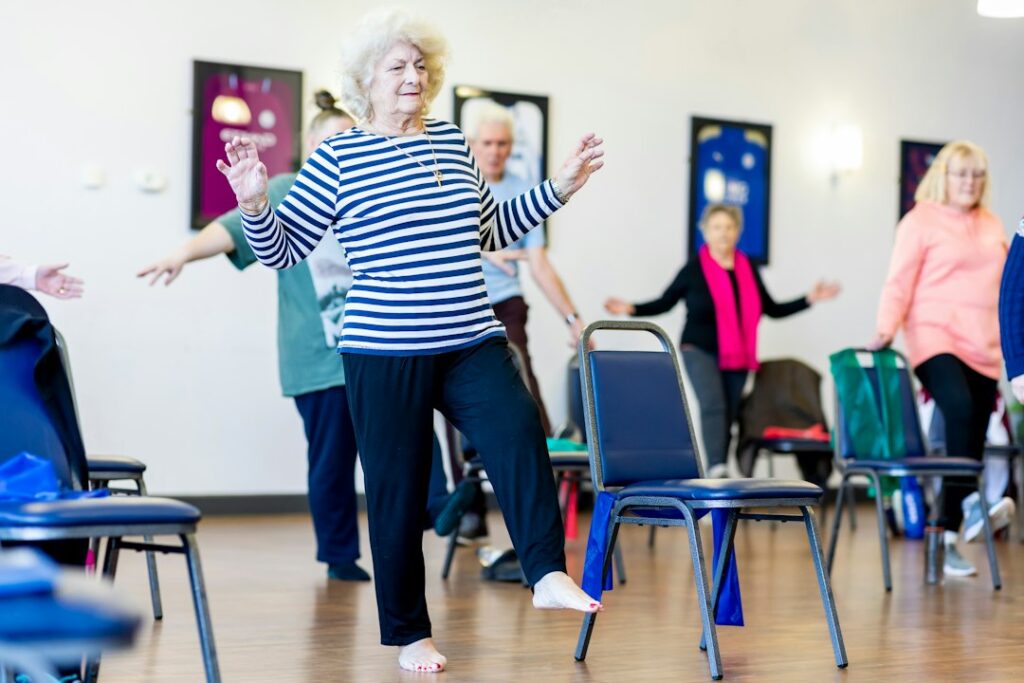
For many older adults, fitness in assisted living is less about athletic performance and more about preserving everyday abilities. A thoughtful program can help residents stand from a chair, walk safely to meals, reach for personal items, and participate in social activities with greater confidence.
What should a fitness program for assisted living residents include?
A well-rounded program usually combines strength, balance, flexibility, endurance, and functional movement. Each area supports a different part of daily life, and activities can be adapted for people with different abilities.
Common components include:
- Seated or standing strength exercises using body weight, light hand weights, or resistance bands
- Balance practice near a stable surface
- Gentle stretching for the shoulders, hips, ankles, and back
- Walking indoors or outdoors when conditions are safe
- Movements that resemble daily tasks, such as rising from a chair or reaching overhead
- Breathing, posture, and relaxation exercises
Programs should offer more than one level of difficulty. A resident who uses a walker, has arthritis, or tires easily may need a seated version of an activity. Another resident may safely complete the same movement while standing or walking.
Why is exercise useful for older adults in assisted living?
Regular physical activity can support mobility, muscle strength, balance, mood, sleep, and confidence. It may also help residents maintain the ability to perform activities of daily living, such as dressing, bathing, transferring, and walking short distances.
Strength training is especially useful because muscle loss can occur gradually with age and inactivity. Exercises that target the legs and hips may make it easier to rise from a chair or maintain steadiness while walking. Upper-body exercises can support posture, reaching, pushing, and the use of mobility aids.
Balance training does not guarantee that a fall will never happen. Its purpose is to improve body awareness, leg control, coordination, and safe responses to changes in position. Even simple activities, such as shifting weight from side to side while holding a sturdy support, can be meaningful when practiced consistently.
Movement may also improve social well-being. Group classes give residents a reason to leave their rooms, interact with neighbors, and establish a regular routine.
What types of exercises are safest for beginners?
Beginners generally benefit from slow, controlled movements that emphasize comfort and technique. Exercise should not require holding the breath, moving quickly, or working through sharp pain.
Examples include:
- Seated marching, ankle pumps, and gentle knee extensions
- Sit-to-stand practice from a firm chair with armrests, if appropriate
- Wall push-ups or seated arm presses
- Heel raises while holding a stable surface
- Gentle trunk rotations within a comfortable range
- Short walking intervals with rest breaks
- Guided stretching after muscles are warm
A class may begin with five to ten minutes of warm-up movement, continue with strengthening or balance work, and finish with slower stretches and breathing. The duration can be increased gradually based on how residents feel during and after the session.
Residents should not feel pressured to keep pace with a group. A shorter session performed regularly may be more useful than an intense workout followed by several days of fatigue or soreness.
How can exercise be adapted for common health conditions?
Fitness activities should reflect a resident’s health history, current abilities, medications, and mobility needs. The same exercise is not appropriate for everyone.
People with arthritis may prefer warm-up movements, gentle range-of-motion exercises, and shorter periods of activity. Those with osteoporosis may need to avoid forceful bending or twisting, depending on individual guidance. Residents with heart or lung conditions may need slower pacing and planned rest periods.
Anyone with dizziness, chest discomfort, unusual shortness of breath, faintness, or sudden weakness should stop exercising and report the symptom. A new or changing medical concern should be evaluated before the resident returns to activity.
Medication timing can also affect exercise. Some medicines may influence blood pressure, alertness, balance, or heart rate. Staff and health-care professionals should account for these factors when helping a resident choose an appropriate schedule and level of effort.
What does a practical weekly routine look like?
A useful routine does not have to involve a formal class every day. A balanced schedule may include strength exercises two or more days each week, brief balance practice several days per week, and walking or other endurance activity as tolerated.
For example, a resident might:
- Practice seated strength exercises on Monday
- Take two short hallway walks on Tuesday
- Join a balance and stretching session on Wednesday
- Repeat selected strength movements on Thursday
- Walk or participate in a light movement group on Friday
- Stretch gently during the weekend

Short bouts of activity can be combined throughout the day. Walking to meals, standing during part of a television program, or completing a few seated exercises before lunch can contribute to an active routine.
Progress should be measured by function rather than appearance. Useful signs include standing with less assistance, walking farther before resting, turning more safely, or feeling less tired during daily tasks.
How does seasonal weather affect activity in Bloomsburg?
Seasonal conditions can influence where and how residents exercise. Winter ice, snow, and cold temperatures can make outdoor walking unsafe, while hot or humid days may increase fatigue and dehydration risk.
Indoor walking routes, seated exercise groups, and hallway movement can help maintain consistency during difficult weather. On pleasant days, outdoor activity may provide fresh air and a change of scenery, but paths should be checked for uneven surfaces, wet leaves, ice, and poor lighting.
Comfortable clothing, supportive footwear, and access to water are practical considerations in every season. Residents who are sensitive to heat or cold may do better with activity scheduled during milder parts of the day.
How can residents stay motivated without feeling pressured?
Enjoyment and routine often matter more than intensity. Residents may be more likely to participate when activities include music, conversation, familiar movements, or a specific daily purpose.
A person who dislikes the word “exercise” may prefer walking with a friend, practicing movements connected to gardening, or joining a stretching group. Choice is also important. Offering seated and standing options allows residents to participate without feeling singled out.
Family members can support activity by asking about progress in functional terms, such as whether walking to the dining area feels easier. Praise should focus on participation, effort, and consistency rather than speed or comparison with others.
Fitness should also respect fatigue, pain, mood, and personal preference. Resting is part of a safe program, not a failure to participate.
What safety questions should be asked before joining a program?
Before beginning a new fitness routine, residents and families should understand how the program handles individual limitations and emergencies. Helpful questions include:
- Are seated and lower-intensity options available?
- How are walkers, canes, and wheelchairs accommodated?
- Can exercises be modified for pain, weakness, or limited range of motion?
- What signs mean a resident should stop?
- Is water available during sessions?
- How are outdoor surfaces and walking routes checked?
- How is progress recorded or communicated?
The goal is not to eliminate every challenge. It is to create regular, appropriate movement that helps residents preserve function while recognizing that abilities can change over time.
